
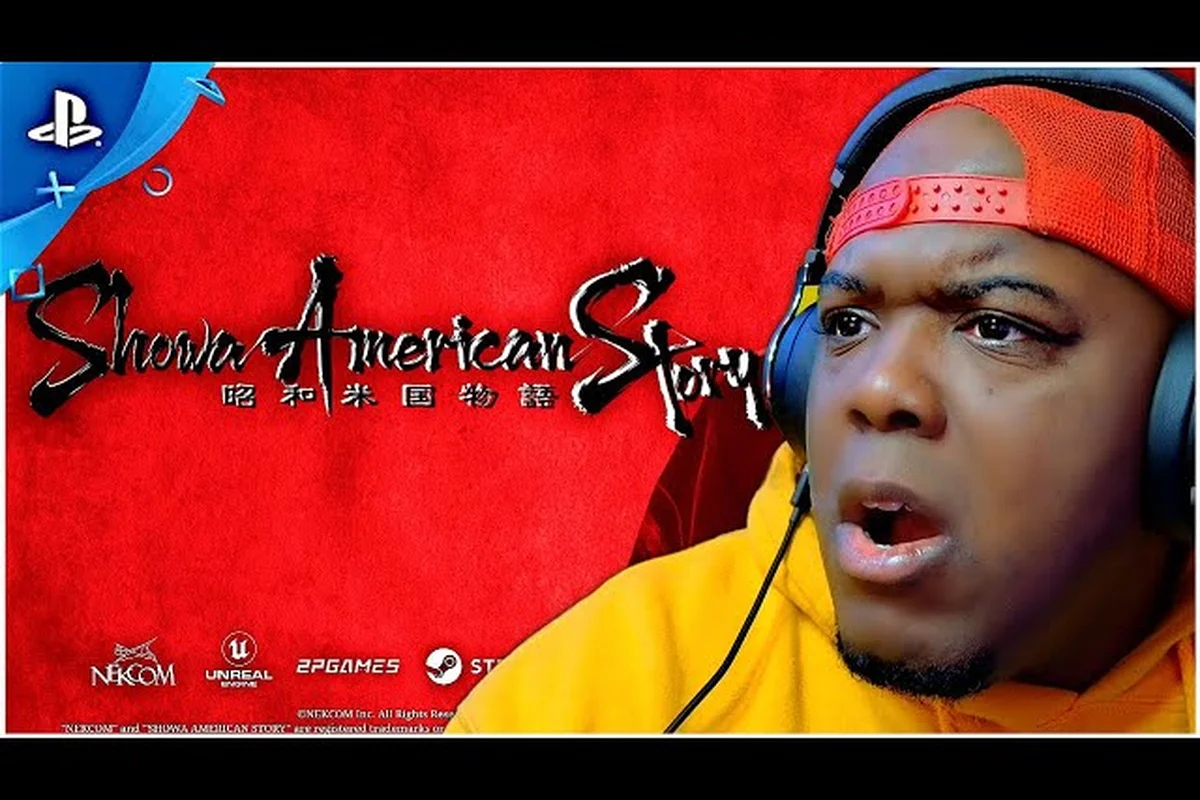
Choko’s stuntwoman past is not a random detail—it is the mechanical and narrative anchor that turns every fight into a live-action film set. By framing her combat as choreographed stunt work borrowed from Neo Yokohama’s Hollywood dream factories, the game transforms traditional RPG violence into a cinematic callback to 1980s B-movies. Understanding why the developers anchored her resurrection to a former stunt performer unlocks the entire Showa American Story stuntwoman backstory.
The Foundation of Choko’s Stuntwoman Backstory
Before the catastrophic incident that turned America into a zombie-infested wasteland under Japanese cultural colonization, Chigusa Choko was a young woman chasing an unlikely dream in the neon-lit studio lots of Neo Yokohama Hollywood. According to the official Showa American Story on Steam page, players take control of a teenage girl “resurrected from the grave” who embarks on a road trip of truth and revenge. That surface description hides a deliberate design choice: her profession before death directly informs how she handles weapons, climbs buildings, and fights mutated enemies.
The developers at NEKCOM wanted a protagonist who could plausibly perform the over-the-top action sequences seen in classic Hong Kong and Japanese exploitation films—running up walls, vaulting over cars, using nearby objects as improvised weapons. A soldier or police officer would feel too military, too grounded. A stuntwoman, on the other hand, spends her life learning to take controlled falls, execute precise fight choreography, and make dangerous movements look effortless. That skillset translates immediately into the game’s free-form combat system. The Showa American Story stuntwoman backstory also explains why Choko can leap across gaps and slide under obstacles without needing a dedicated athletic upgrade—she already had that training.
Her audition dreams tie directly into the game’s hub location. In the early 1980s, before the world collapsed, Choko traveled to Neo Yokohama to audition for a low-budget action film. The scene was rejected, the footage lost, but the dream remained. When she wakes up decades later in the post-apocalyptic Japanese cultural colonization setting, those half-learned stunt sequences become survival instincts. Players who explore the movie-studio district can find faded audition posters and broken cameras, each a ghost of her former life. This is not just atmospheric flavor—it is the key to understanding why a 1980s stuntwoman’s skill set remains relevant in a world overrun by the undead.
How Neo Yokohama Hollywood Shaped Choko’s Combat Style
The Neo Yokohama Hollywood lore paints a picture of a film industry that was taken over by Japanese production companies after colonization. American B-movie studios were rebranded, directors replaced, and the aesthetic became a fusion of Showa-era kabuki drama and 1980s American exploitation cinema. Choko grew up watching these hybrid films, memorizing fight sequences, and dreaming of standing on those sets.
Cinematic Combat Skills
Every ability Choko learns can be traced to a specific stunt technique. Her barrel dodge, for example, is a direct lift from the falling stunt used when an actor is thrown from an explosion. Her cable-pull finisher mimics the wire-assisted kicks popular in 1980s kung fu movies. The developers intentionally designed the skill tree to feel like a stunt double’s résumé.
| Ability | Stunt Origin | Game Function |
|---|---|---|
| Vault Kick | Chase scene over car hoods | Knocks back enemies while clearing obstacles |
| Controlled Fall | Practice pad landing from at least 10 feet | Triggers a ground-punch area-of-effect attack |
| Prop Swing | Bokken dummy weapon training | Heavy melee damage with broken chair/pipe |
| Wire Grab | Wire work used for flying kicks | Pulls distant enemies into close combat |
This table highlights the direct pipeline from stunt choreography to player mechanics. The Showa American Story stuntwoman backstory is not a narrative afterthought—it is the justification for why a teenage girl with no formal military training can defeat heavily armed soldiers and zombies. Every swing, every flip, every improvised weapon usage is something she practiced a hundred times on a film set.
Audition-Phase Equipment
During her early days in Neo Yokohama, Choko scavenged a small collection of props and practice gear from a rundown B-movie prop shop in the Yokohama Hollywood district—leftovers from the city's cultural colonization era. The set includes a tattered stunt harness, a prop Colt Python with simulated recoil, and a training katana etched with Showa-era promotional logos, all of which appear as starter equipment in the game:
-
Prop Katana (blunted for training but still sharp enough to cut a zombie)
-
Stunt Pads (red knee and elbow pads that reduce fall damage by 15%)
-
Spare Film Reel (used as both a key item and a blunt throwing weapon)
The prop katana is especially significant because it bridges the gap between Japanese theatrical swordplay and American movie violence. In the wrong hands, it would be a souvenir. In Choko’s hands, it becomes a survival tool because she practiced with it for months while auditioning for a samurai B-movie that was never made.
Players interested in the specific locations tied to these items can check the Neo Yokohama city tour guide which maps out the studio backlots and prop warehouses where these beginnings take place.
Japanese Cultural Colonization and Its Influence on the Movie Industry
The Japanese colonization lore in Showa American Story is not limited to political occupation—it reshaped American pop culture from the ground up. Movie theaters that used to screen American blockbusters now featured jidaigeki (period dramas) mixed with zombie gore. The film industry was restructured to serve the colonial government’s propaganda machine, and stunt performers like Choko found themselves working for Japanese production houses that demanded higher risk for less pay.
How the Colonization Changed Film Styles
| Pre-Colonization (Hollywood) | Post-Colonization (Neo Yokohama) |
|---|---|
| Focus on practical effects | Emphasis on wire-fu and kabuki-inspired movements |
| Individual hero narratives | Group honor and duty themes |
| American heroes defeat enemies alone | Protagonist must respect the shogun’s authority |
| Stunt doubles were anonymous | Stunt performers become minor celebrities |
This shift is crucial for understanding why Choko’s backstory matters. In a colonized America, being a stuntwoman for Japanese-run studios meant you had to perform dangerous acts while adhering to strict cultural codes. The cultural colonization setting created a unique hybrid where B-movie tropes—explosions, car crashes, gratuitous fight scenes—were filtered through Showa-era aesthetics. Choko’s inner conflict is partly rooted in this tension: she grew up idolizing American action stars but now works for a system that treats her as disposable entertainment.
The Audition That Changed Everything
According to community reports, the developers included a short flashback scene during the first act where Choko recalls her final audition. She was asked to perform a fall from a 20-foot scaffolding while wearing a samurai costume. The director, a Japanese man wearing sunglasses indoors, gave her the job on the spot. That audition is the reason she was in the studio backlot when the catastrophic incident occurred. The timing is not a coincidence—it is the narrative hinge that connects her stunt career to her resurrection.
The Showa American Story stuntwoman backstory explains why she survived the initial outbreak better than ordinary civilians: stunt performers are trained to stay calm in dangerous conditions. While others panicked, Choko used her environment to fight back, a pattern that continues throughout the plot.
B-Movie Aesthetics and 80s Pop Culture in Choko’s Moveset
The 80s pop culture references are thick in every aspect of Showa American Story, but Choko personally embodies them. Her default outfit—a torn bomber jacket over a graphic t-shirt with neon graffiti patterns—looks like it walked off the set of Streets of Fire or The Warriors. The b movie references go deeper than costume: her finisher moves are directly inspired by classic schlock.
Over-the-Top Finishers
-
Splat Roll: Choko runs up a wall, backflips, and lands on a zombie’s head, crushing it into the pavement.
-
Propane Exploit: She kicks a rusted propane tank toward a group of enemies and shoots it with a zip-tied revolver, referencing the iconic gas-station scene from Zombie (1979).
-
Crowd Pull: Throws a handful of loose film reels that explode into confetti, blinding enemies before a machete sweep.
Each finisher is a tiny homage to the 80s pop culture references that the game proudly wears on its sleeve. The developers at NEKCOM explicitly stated that Choko’s move set was designed to mirror the action-comedy tone of Evil Dead II, Big Trouble in Little China, and The Mummy (1999). Her stuntwoman background allows these moves to feel grounded in fake-realism—she did not learn to disarm a zombie with a thrown film reel in a dojo; she learned it on a set where she was paid fifty dollars to pretend-fight.
Weapon Variety from Set Props
| Prop Weapon | Film Genre Reference | In-Game Effect |
|---|---|---|
| Red Phone (wired) | Slasher horror | Stuns and disorients enemies with loud ringer |
| Megaphone | Military sci-fi | Area-of-effect sonic wave; breaks glass |
| Clapperboard | Behind-the-scenes gag | Deals light damage but stuns for 3 seconds |
| Fake Blood Can | Splatter comedy | Slows enemies while creating a puddle of slippery liquid |
The retro references list extends to environmental details: diners have jukeboxes playing synth-wave songs that sound like Drive soundtrack, gas stations stock retro vending machines that dispense soda with kanji labels, and abandoned cars feature pop-up headlights that only existed in the 1980s.
Key Retro References That Define Her Stuntwoman Persona
The showa american story retro references list is a curated museum of 1980s and early-1990s pop culture. For players who enjoy recognizing Easter eggs, Choko’s personal items and dialogue offer a treasure trove of callbacks—her worn-out VHS copy of Neo Yokohama Vice directly mirrors the real-world Miami Vice aesthetic, while the scuff marks on her stunt helmet match the exact crash sequence from the 1987 Japanese exploitation film Death Stunts 3, tying her backstory to Neo Yokohama’s Hollywood lore and the b-movie industry that flourished under cultural colonization.
Reference Category Examples
| Category | Reference | Context in Choko’s Story |
|---|---|---|
| Film | Enter the Dragon (1973) | Choko’s signature roundhouse kick mimics Bruce Lee’s stance |
| Music | Michael Jackson’s Beat It jacket | Her bomber jacket has the same zipper pattern |
| Game Mechanic | Double Dragon beat-em-up | The “pipeline toss” move where she throws enemies into cars |
| Television | The A-Team van | A drivable van with red stripe appears in her flashback |
| Arcade Classic | Rastan sword art | The prop katana design is lifted directly from the arcade poster |
Each reference is woven into the narrative without breaking immersion. The b movie references are especially important because they explain why Choko fights with a flamboyant style uncommon in other survival horror games. Her moves are designed to be cinematic first, practical second, which is exactly what a stuntwoman’s job on set requires.
To learn more about Choko’s overall character arc, the Chigusa Choko character lore guide offers a detailed breakdown of her relationships and hidden dialogue—in particular, how her stuntwoman backstory intersects with Neo Yokohama’s Hollywood-set B-movie culture and the traumatic legacy of Japanese colonization. The guide documents three key hidden conversations that reveal why Choko accepts dangerous film stunts as a form of rebellion against her family’s colonial-era trauma, directly tying her personal arc to the game’s broader critique of cultural assimilation.
Frequently Asked Questions
Why did the developers choose a stuntwoman as the protagonist?
A stuntwoman background allows for fluid, acrobatic combat without requiring a military or martial arts explanation. Choko’s skills are learned through practice, not training, which fits the game’s DIY survival tone. It also ties directly into the B-movie aesthetic that defines Showa American Story.
Where in Neo Yokohama did Choko first learn stunt work?
She trained in the Sunset Studio Lot, a district that was built during the Japanese colonization era. The lot features a fake Western town, a samurai castle set, and a warehouse full of breakaway props. Players can visit this area in Act 2 and find audition tapes scattered among the debris.
How does her stuntwoman backstory affect combat progression?
Unlike traditional RPG protagonists who unlock new weapon skills, Choko’s skill tree is designed around stunt-recovery techniques—falling safely, rolling out of attack range, using enemies as springboards. This makes her playstyle more reactive and improvisational compared to slower tank-oriented characters.
Are there any real stunt performers referenced in the game?
Yes, the development team confirmed inspiration from Yukari Oshima, a renowned Hong Kong action actress who performed her own stunts in the 1980s. Additionally, the sound file for a successful dodge is labeled “stunt-double take,” an inside joke from the audio team.
Can players re-live Choko’s audition scene?
Yes, near the end of Act 3 you re-live Choko’s audition as an interactive flashback. You control young Choko performing a scaffolding fall; perfect execution unlocks a permanent stunt bonus that cuts landing lag by 0.5 seconds—a direct reward tied to her stuntwoman backstory.