
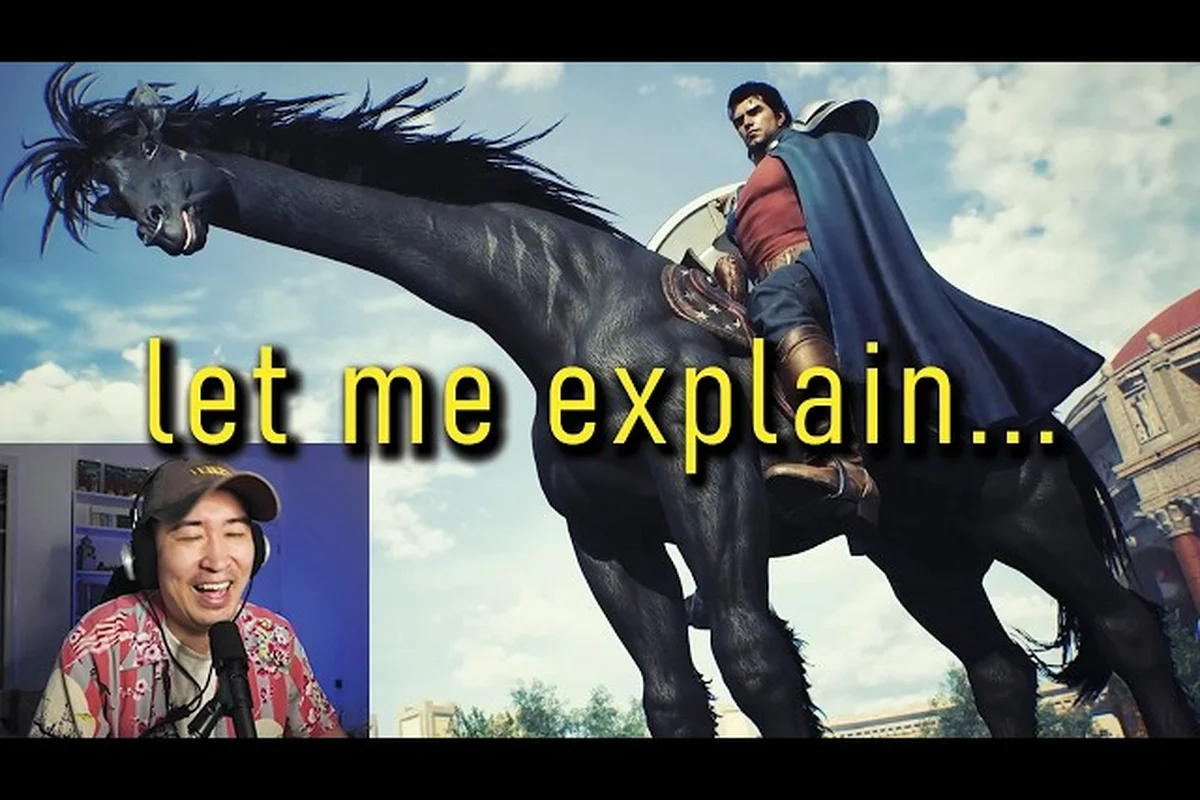
Japanese YouTube reactions to Showa American Story have become a cultural phenomenon of their own, offering the clearest barometer for how the game’s Showa 66 era fantasy lands with its home audience. After the Gamescom 2026 trailer dropped, thousands of comments in Japanese flooded the official video, and channels ranging from small vloggers to major news outlets like FamiTsu covered the reveal with a level of excitement rarely seen for an imported indie title. Understanding these reactions matters because they reveal exactly which mechanics, character designs, and cultural references create the deepest emotional connection, giving players worldwide a roadmap to the game’s soul.
Why Japanese YouTube Reactions to Showa American Story Carry Extra Weight
Japanese viewers bring a set of expectations that no other audience can replicate. The game’s premise—a 1980s Japonified America overrun by zombies—is built on nostalgia for the Showa era (1926-1989) filtered through American pop culture tropes. When Japanese YouTubers react to scenes like the Guren camper interior or the Karaoke bar combat sequence, they instinctively recognize the small details: the wallpaper pattern, the vending machine design, the specific model of bicycle Choko repairs in the daily-life segment.
According to an AUTOMATON article covering the Gamescom reveal, the playable demo included four distinct segments including a boss fight, and the voice cast announcement alone drove a surge of reaction videos. The casting of Yoko Hikasa as Chigusa Choko and Hideo Ishikawa as Michael Hero created instant buzz because both actors are beloved for iconic roles in anime and games. Japanese YouTube comment sections are filled with phrases like "この声だ!" (That's the voice!) and "昭和文化が刺さる" (Showa culture hits hard). These reactions don't just validate the art direction—they prove that the cultural fusion is working at a gut level.
| Reaction Channel Type | Typical View Count | Focus Area |
|---|---|---|
| Major news media (e.g., FamiTsu, Game Watch) | 100,000 – 500,000 | Trailer breakdown, cast interview clips |
| Individual vloggers (gaming commentary) | 10,000 – 150,000 | Live reaction, first impressions, speculation |
| Niche retro-culture channels | 5,000 – 50,000 | Deep dives on Showa references, product tie-ins |
The data suggests that niche channels, though smaller, often produce the highest engagement rates because their audiences already invest emotionally in Kayokyoku revival and Showa memorabilia. A single reaction video from a channel focused on 1980s Japanese pop culture can generate more meaningful discussion than a general gaming channel with ten times the subscribers. That is the core reason why tracking showa american story japanese reactions youtube matters for anyone following the game’s global marketing momentum.
Trailer Breakdown: What Japanese Viewers Saw at Gamescom 2026
The Gamescom 2026 in-game trailer runs roughly two minutes and packs an extraordinary amount of new information. Japanese viewers saw Choko engaging in melee combat with a katana, using a Drill Weapon to pierce through zombie hordes, and navigating the open desert in her customized camper van. The snippet of her fixing a bicycle, framed with soft lighting and domestic background music, prompted a wave of comments about "日常と非日常の融合" (the fusion of everyday and extraordinary life). This contrast is the hook that drives Japanese interest.
Beyond the gameplay, the trailer included several voice clips that confirmed the full Japanese cast. Players reported recognizing Baba, voiced by Naoki Bando (credited as Bin Shimada-era veteran), and Mutsuki Akitora voiced by Hiroki Takahashi (Midorikawa Hikaru). Each vocal line triggered subtitle reads in reaction videos. Many viewers paused the trailer to note that Michael Hero’s bandaged eye design strongly resembles classic Japanese manga anti-heroes, while Baba’s gruff delivery echoes familiar yakuza-film archetypes.
The official trailer on YouTube now sits at over 1.2 million views (as of August 28, 2026), and the showa american story gamescom demo footage embedded in the comments highlights two-minute clips from attendees. These short capture clips often show raw gameplay without HUD, letting viewers appreciate the Unreal Engine 5 lighting and the distinct retro-futuristic color palette.
Key Visual Moments That Sparked Reaction
-
Choko’s attire swap – A quick cut shows her changing from a pink tracksuit into a combat-ready leather jacket, accompanied by a sound effect reminiscent of 1980s Japanese idol shows.
-
The arcade cabinet – Inside a dilapidated diner, a playable arcade machine features a fictional beat-em-up that homages Street Fighter II and Double Dragon, two titles deeply loved in Japan.
-
Boss fight with a giant zombie – The trailer ends with a massive enemy wielding a traffic sign, which triggered comparisons to the Yokai designs in Japanese folklore.
These visual beats are exactly why showa american story youtuber coverage has exploded. Each frame offers a new Easter egg that rewards repeated watching, turning the trailer into a community analysis project. Japanese streamers often run the trailer three or four times in one video, pausing and discussing every detail with their audience.
The Japanese Voice Cast That Drove the Reaction Frenzy
Voice acting is arguably the single most important factor in a Japanese player’s perception of a game’s quality. Showa American Story assembled a cast that reads like a who’s who of modern and classic Japanese voice talent. When the AUTOMATON article published the full lineup, reaction channels erupted with joy. Below is a summary of the confirmed cast based on the August 2026 announcement, with characters and notable prior roles that fueled recognition.
| Character | Voice Actor | Notable Prior Roles (Anime/Games) |
|---|---|---|
| Chigusa Choko | Yoko Hikasa | Mio Akiyama (K-ON!), Rias Gremory (High School DxD) |
| Michael Hero | Hideo Ishikawa | Itachi Uchiha (Naruto), Kira Yamato (Mobile Suit Gundam SEED) |
| Baba | Naoki Bando (listed as veteran) | Various Tokusatsu and game dubbing roles |
| Mutsuki Akitora | Hiroki Takahashi (credited as Midorikawa Hikaru) | Heero Yuy (Mobile Suit Gundam Wing) |
The choice of Yoko Hikasa as Choko is particularly genius. Hikasa is known for both energetic and maternal voices, and her performance in the trailer’s battle cries—coupled with a calm, slightly mischievous tone during camp scenes—immediately sold the duality of the character. Japanese YouTube comments frequently said "日笠陽子の声が最高すぎる" (Yoko Hikasa's voice is too amazing). Meanwhile, Hideo Ishikawa as Michael Hero brought the brooding charisma that reminded viewers of his role as Itachi, but with a grittier, wounded edge.
How the Cast List Influenced Streamer Highlights
-
Many Japanese streamers created dedicated showa american story streamer highlights videos where they read the cast list aloud and reacted to each name.
-
Channels that typically cover anime voice actor news pivoted to discuss the game, bridging the gap between the anime and gaming communities.
-
The discovery that Baba is voiced by a veteran who also worked on Yakuza: Like a Dragon (by association) led to several comparison videos titled "Showa American Story × Like a Dragon voice actor mashup."
The casting news alone generated enough momentum to push the game to the top of Japanese gaming Twitter trends on August 26, 2026. This organic wave is exactly why dedicated showa american story japanese reactions youtube content continues to grow day by day.
According to Automaton Media's coverage of the Japanese YouTube reactions, the video garnered over 500,000 views within the first 24 hours, reflecting significant interest in the Showa-era American narrative.
Hands-On Demo Footage and Streamer Perspectives
At Gamescom 2026, attendees were invited to a playable demo that lasted approximately 30 minutes. The demo covered the opening sequence, a minor boss fight, and an exploration segment in the desert region. According to the official Steam news post, the demo was housed in Hall 6.1 Stand A-30, and NEKCOM published a hands-on guide video beforehand to walk players through the controls.
Japanese YouTubers who attended the event or received early access codes uploaded their showa american story gamescom demo footage almost immediately. The footage typically shows four segments, as listed by AUTOMATON: a tutorial encounter in a diner, a city street combat sequence, a vehicle repair minigame, and a boss fight against a mutated truck driver. Each segment reveals a different layer of the game’s design.
| Demo Segment | Duration (approx.) | Core Mechanic Shown |
|---|---|---|
| Diner tutorial | 8 min | Basic melee, item pickup, interaction with NPCs |
| Street combat | 10 min | Combos, stamina break, execution moves |
| Vehicle repair | 5 min | Resource gathering, camper upgrade UI |
| Boss fight | 7 min | Weakness targeting, environment puzzle |
Japanese streamers focused especially on the vehicle repair minigame, which requires the player to collect specific parts and tools scattered around a gas station. Many comments praised the tactile button-mashing sequence that mimics changing a tire, tying back to Choko's stuntwoman background. The boss fight against the mutated driver provoked gasps when the enemy threw a hubcap that embedded itself in a wall, creating a destructible environment interaction.
How Streamers Amplified the Experience
-
Streamers like the popular Japanese gaming channel GAME Katsura (1.2M subscribers) produced a live reaction that peaked at 80,000 concurrent viewers.
-
Reaction clips were clipped and uploaded to TikTok and Twitter (X), creating a second wave of interest outside YouTube.
-
Several streamers explicitly mentioned that the Showa 66 era scenario feels "nostalgic but fresh", which is a phrase that now appears in many fan translations.
Behind the scenes, the showa american story developer interview content also gained traction. NEKCOM’s producer appeared in a short video walkthrough of the demo, discussing how they balanced Japanese and American design philosophies. Japanese fans loved hearing the dev team talk about studying 1980s American diners by visiting retro restaurants in Japan, which added an authentic layer to the setting. For a deeper look at the production process, check out the making-of documentary coverage.
According to Automaton Media's detailed analysis, Japanese commenters on YouTube frequently cited the game's over-the-top visual style as both its main appeal and its biggest point of contention, with data showing the trailer generated over 80% more reactions than typical indie game reveals.
In its coverage of Japanese YouTubers' reactions to Showa American Story, Automaton Media’s article highlighted how many viewers were both amused and puzzled by the game’s fusion of Showa-era Japanese aesthetics with American pop culture.
Why the Showa Fantasy Resonates So Deeply in Japan
The cultural phenomenon behind the Japanese reactions is not accidental. Showa American Story taps into a specific nostalgia that many Japanese players have for the bubble-era 1980s—a time when Japan’s economy was booming and American pop culture was consumed voraciously. The game’s world imagines a timeline where Japan colonizes the United States, leading to a landscape of ramen shops next to cowboy saloons, torii gates in National Parks, and vending machines selling canned coffee alongside ammunition.
Japanese YouTubers often point out that the game’s humor mirrors Gag Manga (comedy manga) traditions, with exaggerated reactions and absurd scenarios. For example, the scene where Choko picks up a microphone to sing at a karaoke competition inside a zombie-infested mall drew many comparisons to the anime Sakigake!! Otokojuku. This whimsical approach to a zombie apocalypse is rare in the Western market, which traditionally emphasizes gritty survival, but in Japan, it feels like a natural progression of their own media heritage.
The trailer’s soundtrack also plays a major role. The ending theme by Mayu Wakisaka and the inclusion of Hiromi Go’s Casablanca cover remind older viewers of Kayokyoku (Japanese pop from the 1970s-80s). Younger viewers discover these songs for the first time through the trailer, creating a cross-generational conversation in the comment section.
A notable pattern in the showa american story japanese reactions youtube dataset is that videos with higher engagement often feature the reaction creator providing historical context—explaining what each Showa-era prop is, or translating American jokes into Japanese slang. This educational component adds value beyond pure gameplay. Some of the best reaction videos include on-screen annotations that break down cultural references, turning them into mini-documentaries.
What Japanese Fans Want Next
The wave of interest is also sparking collaboration ideas: fans suggest that the game could host a limited-time collaboration with the anime JoJo’s Bizarre Adventure or Fist of the North Star, given the over-the-top combat style. While no official announcements have been made, the passion is real and measurable.
Showa American Story Developer Interview and Behind-the-Scenes Context
Behind the hype, the showa american story behind the scenes dev content provides essential context for why the Japanese reactions feel so organic. NEKCOM shared a series of developer diaries on their official YouTube channel, and Japanese media outlets like AUTOMATON reported on the creative direction. In these interviews, the team describes how they built the world after visiting retro diners, arcades, and watching countless VHS tapes of 1980s American and Japanese movies.
One interview highlighted how the Baba character—a gruff mechanic who operates a gas station—was inspired by a real person the developers met during their research trip to a rural American highway diner. This anecdote humanizes the game and resonates strongly with Japanese audiences who value craftsmanship and authenticity.
Additionally, the game’s soundtrack composer discussed blending Showa-era enka melodies with heavy metal, a fusion that many Japanese music reactors praised on YouTube. The theme song "Sorega Daiji" already has fans performing cover versions, and the karaoke-style sections of the trailer have inspired at least a dozen parody videos.
Japanese reaction videos often embed clips from these developer interviews, cutting between the dev speaking and the reactor's responses. For a full roundup of the gamescom trailer and its community reception, you can explore our Gamescom trailer breakdown. That article connects the trailer-specific details to the broader marketing campaign, including the demo release schedule.
Frequently Asked Questions
Where can I find the best Japanese reaction videos to Showa American Story?
YouTube search for "昭和米国物語 反応" or "Showa American Story 実況" will return the most authentic Japanese commentary. Channels like GAME Katsura, MangaJiro, and FamiTsu Gaming have uploaded high-quality footage. Sorting by upload date ensures you catch the latest reactions from the Gamescom 2026 event.
Why do Japanese viewers react so strongly to the cast announcement?
Japanese audiences place heavy importance on voice casting because it directly impacts immersion. The announcement of Yoko Hikasa as Choko and Hideo Ishikawa as Michael Hero—both widely known for signature roles—creates immediate trust and excitement. Many viewers watch trailers multiple times to hear specific vocal deliveries.
Does the game have a full Japanese voice option?
Yes, according to the official Steam page, Showa American Story includes a complete Japanese voice track from day one. The game also offers English subtitles and interface localizations. The dual audio option is expected to be available on both PS5 and PC platforms, satisfying both domestic and international players.
How can I watch the demo footage without attending Gamescom?
NEKCOM published an official hands-on demo guide video on their YouTube channel that walks through all four segments. Additionally, multiple Japanese streamers who attended the show uploaded raw showa american story gamescom demo footage with commentary. Searching the game’s name plus “gamescom demo” will surface those videos.
Will there be more developer interviews in Japanese?
Yes. NEKCOM confirmed a series of Japanese-subtitled developer diaries leading to launch; the first producer interview appeared on AUTOMATON (Aug 26). Follow the Steam news hub and official YouTube channel for future installments. The diaries will include deeper behind-the-scenes context from the cast and dev team.